
Noted economist Arvind Subramanian is favoured as the choice for the government's Chief Economic Advisor (CEA).

The benchmark indices have rallied 28 per cent this year, while the broader market has outperformed

Despite all of the PM's many strengths, it is increasingly clear that he does not necessarily have a coherent and clear worldview on matters of macro policy.
Nearly 400 stocks hit their 52-week low on BSE on Thursday.

The fall was led by L&T, IndusInd Bank, PowerGrid, NTPC, TCS, ICICI Bank, Axis Bank, Hero MotoCorp, Bharti Airtel and SBI, declining up to 2.64 per cent.

The NSE 50-share Nifty also closed higher by 61.60 points, or 0.59 per cent, at 10,504.80 after shuttling between 10,513 and 10,441.45.
The CAD has been narrowing since 2012 to an estimated 1.6% of GDP in 2014

On the 30-share index, Maruti was the biggest loser, shedding 3.60 per cent. Other major laggards were Yes Bank, IndusInd Bank, Tata Steel, Hero MotoCorp and NTPC -- ending up to 2.33 per cent lower.
Among Sensex constituents, Vedanta fell 3.40 per cent, followed by SBI 3.17 per cent, Yes Bank 3.11 per cent, Axis Bank 1.68 per cent, ONGC 1.60 per cent, Power Grid 1.52 per cent and HDFC 1.48 per cent.

The academic prize is sponsored by the Deutsche Bank Donation Fund and carries an endowment of euro 50,000.

A weaker rupee could aid corporate earnings through its positive impact on export intensive sectors such as information technology services, pharmaceuticals and commodity producers such as metal and mining, and oil and gas companies.

The mid- and small-cap indices had a dream run between January 2017 and January 2018 - zooming 48 per cent and 56 per cent, respectively.

It came on the back of tepid dispatches in the March quarter as consumer sentiment took a knocking, owing to uncertainty ahead of the general election.

The markets are in bubble territory.

China's economy, which suffered 6.8 per cent slump in the first quarter due to the coronavirus pandemic -- the worst in 44 years -- bounced back posting 4.9 per cent growth between July and September buoyed by the government's sweeping efforts to stimulate demand and consumption.

HDFC Bank was the top loser in the Sensex pack, falling 2.99 per cent, followed by Adani Ports at 2.87 per cent.
.jpg)
Despite criticism, the investment bank said that it stands by its research.

Subramanian, a senior fellow at the Peterson Institute for International Economics in Washington, attended a news conference in New Delhi at which his appointment was announced.

FPIs sold shares worth a net Rs 1236.95 crore on Friday.

Sensex heavyweight Reliance Industries fell 2.76 per cent. In percentage terms, major laggards were Yes Bank, Indusind Bank, RIL, ICICI Bank, HDFC and Axis Bank -- plunging as much as 6.62 per cent.

Inflation is estimated to be around 8 per cent in FY15 and is likely to decline further towards 6.5 per cent in FY16, Citigroup said.

Both Sensex and the rupee posted slight gains on Monday but Brexit concerns lingered.

Persistent capital inflows by domestic institutional investors and retail investors kept the markets in fine nick

Crude oil prices have more than doubled, pushing up India's import bill and raising fears of a higher current account and fiscal deficit. This will impact corporate earnings.

Global markets could correct 5-10 per cent. If that happens, Indian markets will correct about 10 per cent

There will be pressure on the fiscal situation, especially at a time when the monsoon can also disappoint. More populist expenditure is on cards if the mandate is a hung Parliament or a coalition government.

The strategy of returning cash to shareholders through stock purchases could hinder their digital expansion plans
Global events will continue to be in the limelight, besides domestic policy.

At least three brokerages, two domestic and one global, have said the company could cut its revenue growth guidance again in dollar terms

Both benchmark indices were driven by strong gains in IT, teck, oil and gas, pharma and banking shares amid earnings optimism.

The 50-share NSE Nifty ended flat, up 5.80 points, or 0.06 per cent, at 10,308.95.

Slowing economy, election-related uncertainty and tighter monetary conditions pose risks for Indian markets and the BSE index, Sensex, is likely to hover around 20,250 by the end of this year.

The rally in most of these stocks is partly attributed to impressive financial performance.

Premium valuations era started in 2006 and went hand in hand with decline in the US interest rates

Aptech, Lumax Industries, Vedanta, Indian Bank, Venky's India have appreciated over 200% in a year
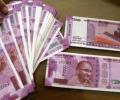
With India's imports exceeding exports, weak rupee does more harm than good. Analysts, however, say that rupee depriciation is positive for export-oriented sectors such as IT services, pharmaceuticals, textiles and automobiles
Sun Pharma dipped 2% to Rs 615 on the BSE, its lowest level since November 9, 2016

The Sensex has slid 18.5 per cent from its January 2015 peak.

Notable losers were ONGC, Axis Bank, ITC, SBI, ICICI Bank, NTPC, Hero Motocorp, Sun Pharma and Bharti Airtel who fell by up to 2.80 per cent.

Overall market benchmark Sensex is headed for its worst performance in four years with a decline of 1,650 points
 © 2026 Rediff.com - Advertise with us - Disclaimer - Privacy Policy - Sitemap - Feedback - About us - Terms of use - Grievances